Laws Governing Oceans and Autonomous Vessels

           The world is constantly changing with the development of new technology.  This is especially true with unmanned systems and supporting technology. There have been many successful implementations of unmanned systems in recent years for drones, self-driving cars, and automated vessels.  This article is going to review the successful implementation of unmanned maritime vessels and the legal aspects of these systems.

           SpaceX is known for its development of reusable rocket systems to reduce costs and make space travel more efficient for a future mission to deep space. These drone ships are autonomous and have many different capabilities that can be used remotely during the recovery of a rocket booster.  The drone ships are not designed to move over long distances but are tugged to a location where they will adjust in short distances for the landing position of the rocket.  The drone ships have firefighting capabilities, a robot to secure the rocket and a thruster to stabilize the ship (SpaceX Fleet, 2020).
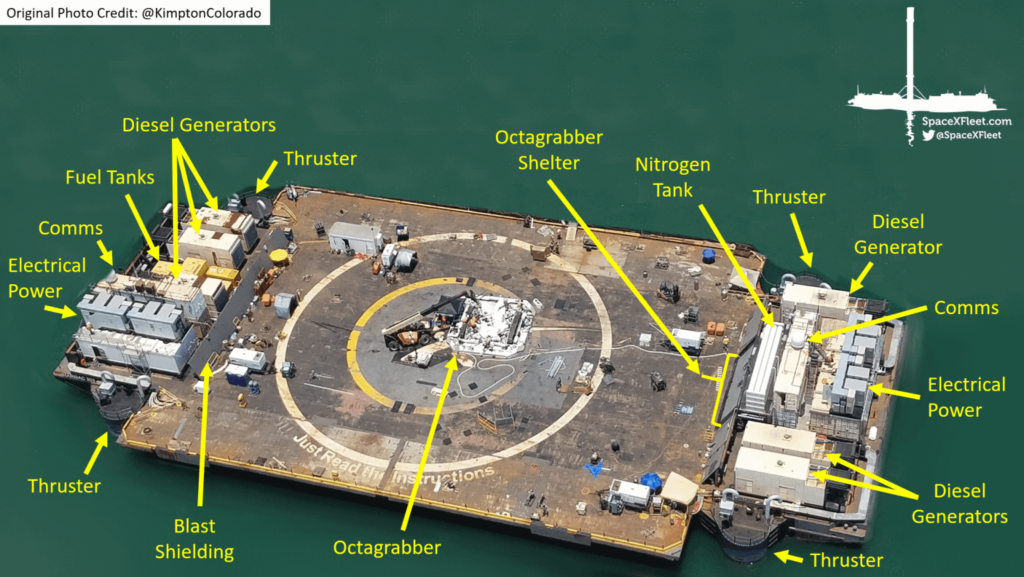
Figure 1. Just Read the Instructions Layout (SpaceX Fleet, 2020)

           The SpaceX drone ship is only one successful implementation of an autonomous ship.  There are many more for research and development and country defense. The only problems with unmanned vessels are the legalities of their operation and usage. Maritime laws that have been established have been focused on manned vessels and not the classification of unmanned systems (Norris, 2013).  There are many debates on how to classify unmanned vessels.  There are some thoughts that they should be classified as mines if they are tethered or immobile.  Some thoughts are that there should be new classifications to cover all unmanned vessels (Delgado, 2018).  Another topic of discussion is the navigational implications of their usage at sea.  The navigational rights for ships clear for innocent, transit, and archipelagic sea lanes passage.  However, these laws apply to manned ships (Delgado, 2018).

            The classification of unmanned vessels is still up for debate and the need for classification is required before any other application to maritime laws can be applied.  Classifying an unmanned vessel as a ship will apply the current maritime laws to the ship.  The issue is the liability of the operator for the vessels.  To date, there has not been a classification of unmanned vessels within the maritime laws (Norris, 2013).  So, their responsibility and liability are lagging that of manned vessels. This is like the lagging of unmanned aerial vehicles for the Federal Aviation Administration.

            The other topic of navigational rights is also in question.  Maritime laws have three different rights of passage for vessels.  These rights apply to manned ships, but it is unknown if unmanned ships can follow these same rights. The first right is the right of innocent passage.  This right gives “ships of all states” the ability to navigate within the territorial sea of a coastal state (Norris, 2013). The second right is the right of transit passage.  This allows ships and aircraft to transit through straights and overflight where the destination is another state. The last right is the archipelagic sea lane.  The sea lanes are created by multiple states and all ships and aircraft can operate within these lanes (Norris, 2013).

            By reviewing the navigation rights of maritime laws, it is easy to recognize the importance of classifying unmanned vessels or create a new classification to better fit the current laws that govern the seas.  With the lack of classification, there is no clear answer to what unmanned vessels can do and their actions can be construed by each state. Unmanned maritime vessels will continue to be implemented for Navies, countries, and companies, so the need for these laws to be updated or applied are necessary for continued globalization.

References

Delgado, J. P. (2018). The Legal Challenges of Unmanned Ships in the Private Maritime Law: What Laws Would You Change? maritime, Port and Transport Law between Legacies of the Past and Modernization, 493-524.

Norris, A. (2013). Legal Issues Relating to Unmanned Maritime Systems Monograph. U.S. Naval War College.

SpaceX Fleet. (2020). Just Read the Instructions. Retrieved from SpaceX Fleet: https://spacexfleet.com/just-read-the-instructions
Unmanned Aerial Vehicles: Naval Benefits

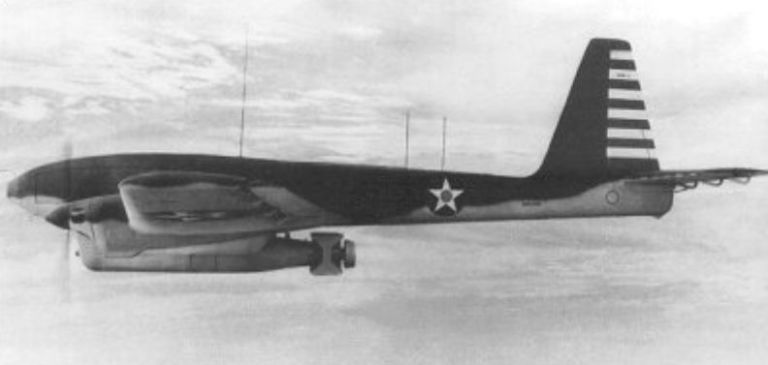
The military has employed drones in military operations since World War II.  In World War II, the United States Navy primarily used these drones for target practice.  However, the United States Navy invested in a twin-engine optionally manned bomber aircraft.  The technology at the time was primitive for radio control and the unmanned aerial vehicle used a television camera and signals to view and control the aircraft. This aircraft was called the TDR-1 (Mizokami, 2017).

Figure 1. (Mizokami, 2017)

            Now unmanned operations have been very appetizing to the United States and Foreign Militaries because the practical applications of unmanned vehicles reduce the risk of loss of human life.  The technological advancements of wireless technologies, global positioning systems, and aircraft systems have led to more advantageous and affordable options for high-risk missions rather than using humans that could be exploited or killed during the mission.  A journal article, “Unmanned Aerial Vehicles in the Navy: Its Benefits” (2016) by the Portuguese Navy outlined the benefits of utilizing unmanned aerial vehicles in combat operations.  The article explores various topics that will be explained in this blog post.

            There are some direct benefits to using Unmanned Aerial Vehicles over their human counterparts is training requirements, material loss, human physiology, and cost.  To being, humans require an intensive amount of training to complete certain tasks or complete a specific mission (Rosa, Marques, & Lobo, 2016).  This training is very time-intensive and costly. Humans that are recruited to complete these types of training can also become injured or killed.  This is very financially impactful to the militaries and their training programs. For the United States Navy Seals it cost over $500,000 to train one Navy Seal and around 2.5 years to complete the training without any repeats (Gaskell, 2009).

            Human loss versus material loss is an important aspect of the benefits of unmanned aerial systems.  The destruction of a machine or robot is a financial burden that can be replaced or repaired.  During high-risk missions, like intelligence, surveillance, and reconnaissance (ISR), the loss of human life outweighs some of the benefits of the intelligence that is gathered.  If a human is captured and killed, the impact is far greater than the destruction of a machine.  The human may have family obligations that would be impacted by the loss of a loved one.  Their loved ones could never be replaced in this event (Rosa, Marques, & Lobo, 2016).

            Material loss when compared to human life is far less impactful.  Material exploration could happen with the loss of some proprietary information however only a limited amount of information may be lost.  Humans contain far more information to be exploited that could compromise other missions or human lives (Rosa, Marques, & Lobo, 2016).

            Another added benefit of unmanned systems is the lack of physiological needs that are required by humans.  UAVs or UVs only need power and limited connectivity to complete their tasks or missions. UVs do not need to eat or sleep and they are not greatly affected by temperature. These capabilities make them or viable options for long-duration surveillance or missions that require multiday or multi-month operations.

Figure 2. (Rosa, Marques, & Lobo, 2016)

            While the cost of UVs can be significantly more than some human training, the human cost of life will outweigh some of the cost of unmanned systems. The ease of replacing a UAV on the battlefield is far easier and less time consuming than replacing a trained Sailor, Airmen, or Soldier with the same level of experience and skill.  These benefits have made unmanned vehicles very attractive to all militaries across the world and will continue to be developed and implemented to ease the burden of the death of human lives.

            I would have to agree with the journal article by the Portuguese Naval Academy, that unmanned aerial vehicles are better for high-risk missions, specifically the intelligence, surveillance, and reconnaissance (ISR) along with some aerial combat operations.  These systems allow longer duration flights without the need for human physiology needs to sleep and eat.  Also, the training cost to prepare pilots, operators, or Sailors can be outweighed and outperformed by UAVs. As technology increases with these systems their application to save human lives and obtain required information without the risk of exploitation will replace the human aspects of the battlefield and how wars are fought.

References

Gaskell, S. (2009, April 14). Three Navy SEALS freed Capt. Phillips from pirates with simultaneous shots from 100 feet away. Retrieved from New York Daily News: https://www.nydailynews.com/news/world/navy-seals-freed-capt-phillips-pirates-simultaneous-shots-100-feet-article-1.360392

Mizokami, K. (2017, September 21). The Forgotten Drone of WWII. Retrieved from Popular Mechanics: https://www.popularmechanics.com/military/aviation/a28312/wwii-drone-strike-tdr-1/

Rosa, G. C., Marques, M. M., & Lobo, V. (2016). Unmanned Aerial Vehicle in the Navy: Its Benefit. “Mircea cel Batran” Naval Academy Scientific Bulletin, 39-43.

U.S. Navy’s Unmanned Maritime Systems

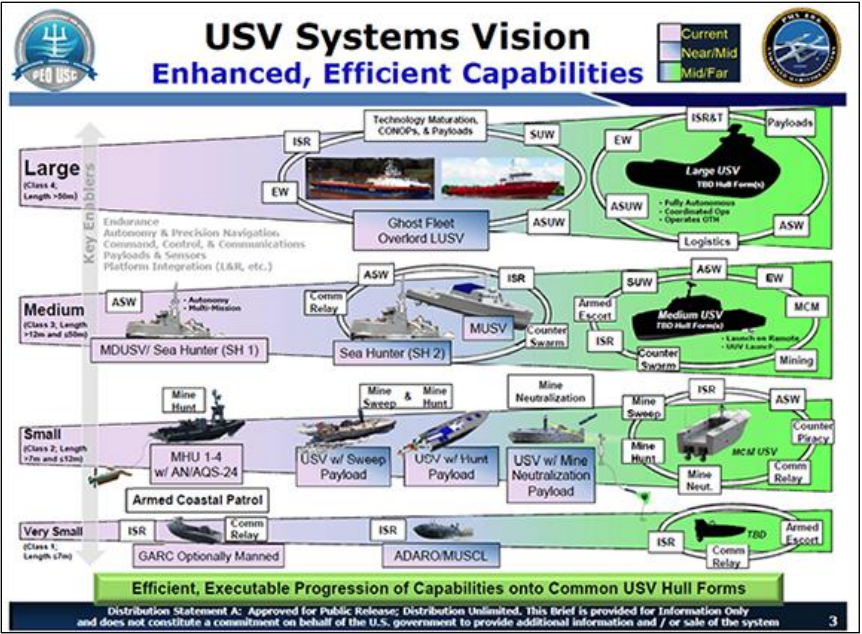
The United States Navy has invested in numerous autonomous maritime vehicles throughout the years and plans on extending its capabilities to a larger scale. The Navy requested $579.9 million for FY21 to fund three different categories of the unmanned vehicles. These categories are defined as Large Unmanned Surface Vehicles (LUSV), Medium Unmanned Surface Vehicles (MUSV), and Extra-large Unmanned Undersea Vehicles (XLUUV) (O’Rourke, 2020).

Figure 1. (O’Rourke, 2020)

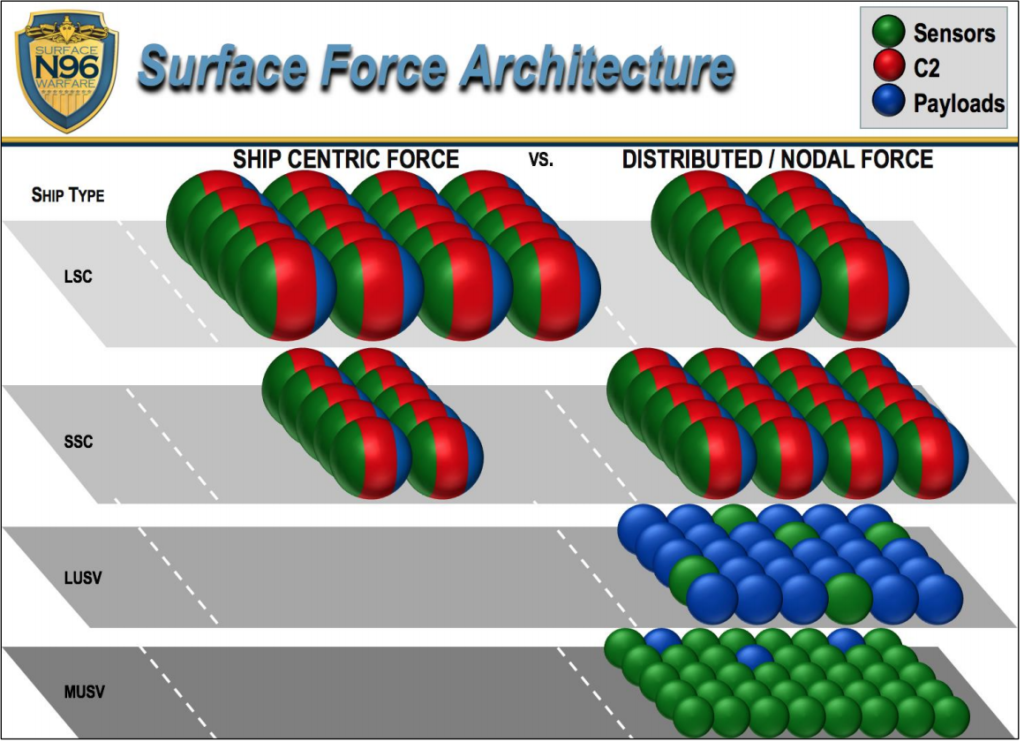
The capabilities of each of these categories of maritime systems would be used to help retain the United States Naval capabilities while Chinese naval spending increases (Larter, 2020).  As the Navy begins to look at more and more unmanned capabilities the organization would have to change the structure of the Naval Force. Currently, the architecture the Navy uses is for large scale manned operations and vehicles with small unmanned systems for sub-hunting and mapping. However, this change in larger-scale unmanned systems would require the organization to change its command and control platforms and procedures (Larter, 2020).

The figure below is a visual representation of the difference for the current ship-centric force and the distributed / nodal force that the Navy would use with more unmanned maritime systems (O’Rourke, 2020).

Figure 2. (O’Rourke, 2020)

The movement to a more distributed force has been difficult to obtain due to the technology gap. However, with new advancements with underwater communications and artificial intelligence.

Underwater communications with ships and submarines are difficult due to the wave prorogation that occurs underwater versus in the air. Due to the density of water, radio waves do not travel as far (Matheson, 2018). However, two new technologies are being developed to solve this issue. First, university researchers have been developing quantum communications. Quantum communications do not have the same prorogation issues that degrade radio waves. This type of communication would not have any or minimal interference with smooth or turbulent water. Quantum communications technology is promising, however still in the early stages of development (Mizokami, 2020).

Another communication technology that could be an enabler is wireless communications that use sonar to prorogate signals to the surface of the water for an airborne sensor to read from an airplane (Matheson, 2018). This technology is not necessarily new; however, the application of sonar would be a new development. The application for the U.S. Navy would be to gather information from autonomous submarines during long extensive missions and provide command and control of these unmanned systems.

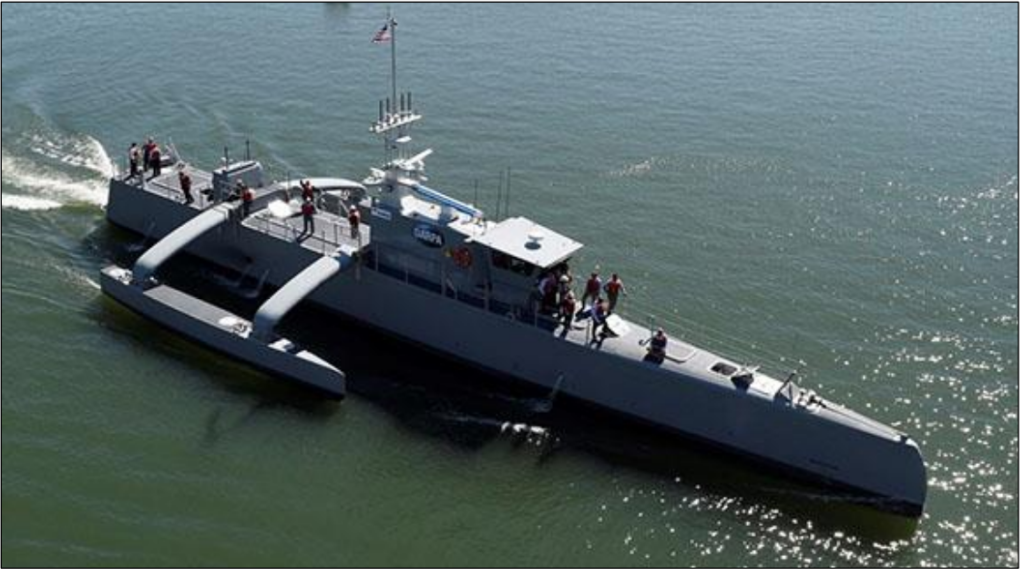
Artificial Intelligence has been a technology that continues to improve and ensure more autonomy for unmanned systems. The U.S. Navy is already developing this technology through DARPA with the Sea Hunter. The AI technology currently used is for single operations. However, they are continuing to develop a “swam” or cooperative behavior that would allow communications between unmanned systems to better patrol and navigate for months at a time autonomously (Congressional Research Service, 2020). The cost of utilization would be around $20,000 a day versus $700,000 a day for manned operations.

The Sea Hunter’s AI system is currently customizable for full autonomy, semi-autonomy, or human operators in the loop.

Figure 3. (O’Rourke, 2020)

The U.S. Navy’s transition to more and more unmanned systems will require a large investment in enabling technologies to ensure the success of the programs. While the enabling technologies are available, they are still in their infancy for deployment in water operations. The necessity for the Navy to continue to build combat power will remain with the Chinese investing millions in their Navy. The technology is only one aspect of the equation for unmanned systems. Command and control systems that are currently in place with the Navy will need to be revised and tested to ensure a distributed system will work in practice and during combat operations.

Only time will tell if the development of these different autonomous maritime vehicles will enable the future success of sea operations.


References

Congressional Research Service. (2020). Artificial Intelligence and National Security. Washington, D.C. : Congressional Research Service.

Larter, D. B. (2020, February 13). The US Navy is spending millions plotting the drone-enabled fleet of 2045. Retrieved from Defense News: https://www.defensenews.com/naval/2020/02/13/the-us-navy-is-spending-millions-plotting-the-drone-enabled-fleet-of-2045/

Larter, D. B. (2020, June 1). US Navy embraces robot ships, but some unresolved issues are holding them back. Retrieved from Defense News: https://www.defensenews.com/naval/2020/06/01/us-navy-embraces-robot-ships-but-some-unresolved-issues-are-holding-them-back/

Matheson, R. (2018, August 22). Wireless communication breaks through water-air barrier. Retrieved from MIT News: https://news.mit.edu/2018/wireless-communication-through-water-air-0822

Mizokami, K. (2020, April 22). Quantum Communication Could Make U.S. Subs Even More Deadly. Retrieved from Popular Mechanics: https://www.popularmechanics.com/military/research/a32225290/quantum-communication-submarines/

O’Rourke, R. (2020). Navy Large Unmanned Surface and Undersea Vehicles: Background and Issues for Congress. Washington, D.C.: Congressional Research Service.

Defining an unmanned system.

Unmanned systems have been a popular term for the last decade with the commercialization of hobby drones (unmanned aerial vehicles) and autonomous cars and planes. However, the term unmanned system is somewhat vague as to the actually meaning of the phrase. An unmanned system is a vehicle or computer that autonomously completes an action without the assistance or interaction of a human being. This definition is also a little vague but begins to narrow down the functions of an unmanned system. However, this does not mean that an unmanned system completely removes the human from the equation. Generally, unmanned systems are operating with or concurrently with humans to ease task saturation or provide a service.

There are many different types of systems that are currently being explored to use this technology to include automobiles, aircraft, and boats. Each of these industries has there own abbreviations for its specific form of transportation. UAV stands for unmanned aerial vehicle and UGV stand for unmanned ground vehicles.

Being to understand the terminology of unmanned systems helps bring clarity and thought-provoking ideas to the applications and industries that would benefit from these systems.